Bedding · Materials and construction
How Naturepedic’s Down Duvet Construction Shapes Loft and Warmth
A duvet’s warmth is not determined by filling alone. The amount and quality of down, the way it is held in place, and the fabric surrounding it all influence how a comforter feels across the bed—and across the night.
“Lightweight” and “warm” may sound like opposites in bedding, but down makes that combination possible. Its delicate clusters can trap still air while adding relatively little mass. The practical result depends on more than a label: fill power describes loft under a standard measurement, while fill quantity, stitching, shell fabric, and room conditions determine what a sleeper actually experiences.
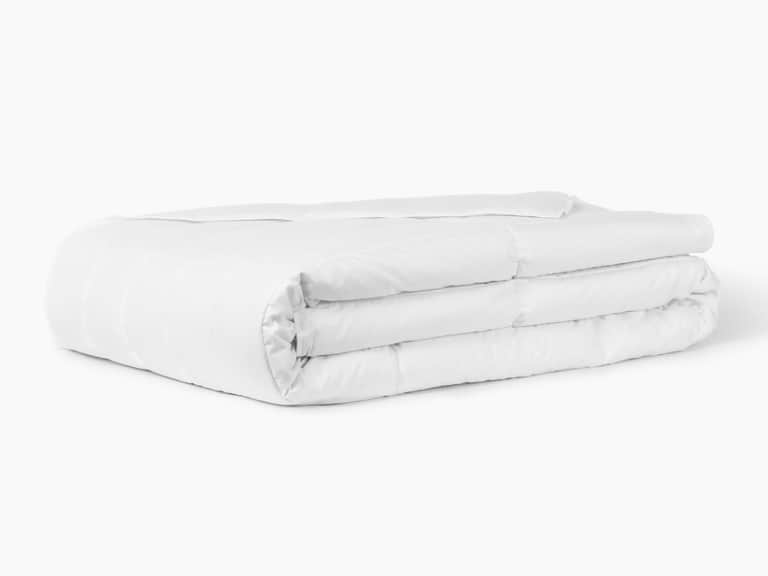
Naturepedic’s Organic Down Duvet Insert offers a useful example of how those elements work together. Its listed construction pairs 750-fill-power USA soft white duck down with a certified organic cotton shell and a stitch-through box pattern. Available in Lightweight and All-Season options, the insert illustrates a central principle of duvet design: the same general material can create different sleep experiences when its quantity and construction change.
This is an educational guide to duvet construction, not a guarantee that any one insert will suit every sleeper. Preferences vary with bedroom temperature, sleepwear, mattress layers, and personal sensitivity to warmth. Understanding the specifications can make comparisons more meaningful—and help you choose a bedding system based on how you sleep, rather than on a single headline number.
What “loft” means in a down duvet
Loft is the visible and tactile fullness of a filling when it has room to expand. Down clusters are prized for their ability to trap air, creating a cushioned, airy layer. In a duvet, that loft can lend a soft, enveloping feel without requiring a dense, heavy blanket. But loft is not a direct synonym for warmth: a lofty insert can feel light in the hand and still provide substantial insulation.
Down works through the air held among its clusters. That trapped air slows the movement of heat away from the body, which helps the bedding retain warmth. The duvet’s shell and quilt pattern shape the space available to the fill, while the weight of the down determines how much insulating material is present. A lofty appearance is one part of the picture, not a complete measure of thermal comfort.
Down and feathers also have different structures. Down consists of soft clusters without the firm central quill associated with feathers. Feathers can contribute more structure and weight, while down is valued for its lightness and ability to expand. Many products use a blend, but the Naturepedic insert described here is filled with duck down rather than a stated down-and-feather blend. Checking the product’s actual fill specification matters: “down duvet” and “feather duvet” are not interchangeable descriptions.
Fill can settle during use, and the way it is distributed affects whether a duvet feels uniformly cushioned or uneven. Good construction aims to keep insulation in place, reduce cold patches, and preserve the intended feel over time. Regularly fluffing an insert and using a properly sized duvet cover can help it recover its loft between nights.
Fill power: a measure of loft, not a warmth rating
Fill power is a measure of how much space a given weight of down occupies under specified testing conditions. In broad terms, higher fill power indicates down that can expand to greater volume for its weight. Naturepedic lists the insert at 750 fill power, placing it in a range associated with notable loft and a light feel relative to the insulation it can provide.
The number should not be read as a thermostat. A 750-fill-power duvet is not automatically warmer than every duvet with a lower rating. A lower-fill-power insert may use more filling by weight and deliver substantial warmth; a higher-fill-power insert may use less material to achieve a lofty, airy profile. The total fill weight, the size of the duvet, its construction, and the intended warmth level all contribute to the final result.
For a useful comparison, treat fill power as one specification among several. Look for the fill composition, the available warmth options, dimensions, shell material, and construction. If two inserts have different sizes or total fill weights, their fill-power figures alone cannot tell you which will feel warmer. In practical terms, the best question is not simply “Which number is higher?” but “How is this insert designed for the conditions in which I sleep?”
Fill power also does not describe the source, processing, or animal-welfare standards of down. Those questions require separate information from a manufacturer or certification program. Naturepedic describes this insert as using ethically sourced USA soft white duck down; readers who want to assess sourcing should review the company’s current supporting details and the scope of any applicable certification.
Stitch-through boxes: a simple construction with a clear purpose
The Naturepedic insert uses a stitch-through box pattern. In this construction, stitching passes through the upper and lower layers of the duvet, creating connected compartments that help divide the fill into sections. These boxes limit how far down can travel and help maintain more consistent distribution across the surface.
That structure has a trade-off. A stitch-through seam connects the two sides of the duvet, so the fill is not separated by a continuous fabric wall at every boundary. Along the stitched lines, there is less space for down to loft than in the center of a box. A well-made duvet balances the compartment size and fill distribution to keep the surface comfortable and reduce noticeable cool strips.
Another common approach is a baffled-box construction. Here, fabric walls sit between the top and bottom layers, allowing the compartments to retain greater depth and giving down more room to expand. Baffles can support a fuller, loftier construction, but they do not make every duvet automatically warmer or better. The result depends on fill amount, design, workmanship, and the sleeper’s needs.
For a shopper, the practical distinction is about how the fill is held in place and how much space it has to expand. Stitch-through boxes can produce a comparatively stable, straightforward profile. Baffled boxes are often used when designers want to preserve more loft across deeper chambers. Neither description substitutes for checking the stated warmth level and overall specifications.
Compartment layout also affects maintenance. Over time, down may shift within a section or compress after being stored. Gentle shaking, airing, and following the care instructions can help restore an even feel. If a duvet develops persistent thin areas, inspect whether the fill has shifted, whether the insert is the right size for its cover, and whether the care method is appropriate for its materials.
The shell: more than an outer layer
The shell is the fabric enclosure around a duvet’s filling. Naturepedic specifies certified organic cotton for its insert, with a down-proof construction intended to contain the fill. A shell needs to be tightly woven enough to help prevent small down clusters from escaping, yet comfortable against the skin and practical for bedding use.
Fabric also contributes to the way an insert feels. Cotton can offer a familiar, natural hand and may feel breathable, though the sensation depends on weave, finish, and the rest of the bed. The shell cannot eliminate the insulating effects of a thick duvet, but it forms part of the system through which heat and moisture are managed. A duvet cover adds another layer, influencing touch, airflow, and the ease of cleaning the bedding.
Organic certification speaks to specific requirements in a material’s production and processing; it does not, by itself, tell you how warm a duvet will feel or guarantee a particular sleep outcome. It is useful to separate claims about fiber and certification from claims about comfort. A responsible comparison considers both, while recognizing that the most comfortable fabric is partly a matter of personal preference.
Fit is important as well. A cover that is significantly larger than its insert can allow the duvet to shift inside, while a cover that is too small may compress the filling and limit its loft. Corner ties or loops, where provided, can help secure the insert. The Naturepedic details list sizes including Twin/TwinXL, Full/Queen, and King/CalKing; matching the insert to the cover’s dimensions and attachment points helps maintain an even arrangement on the bed.
Weight and warmth: choosing between Lightweight and All-Season
Naturepedic offers the insert in Lightweight and All-Season versions. Those labels are intended to help distinguish warmth preferences, but they are not universal temperature standards. A room’s heating and ventilation, local climate, mattress protector, sheets, pajamas, and individual sleep patterns can all change how warm a duvet feels.
A lightweight option may suit a warm bedroom, a person who tends to overheat, or someone who prefers a thinner covering. An All-Season option may be a more versatile choice where temperatures vary or where a sleeper wants a more substantial layer for much of the year. These are starting points, not rules. A cool sleeper in a chilly home may find a lightweight duvet insufficient, while a warm sleeper in a well-heated room may prefer a lighter insert even in winter.
Think of the bed as a layered system. Sheets sit closest to the body; blankets, mattress layers, and the duvet build additional insulation. Swapping a sheet fabric or removing a blanket can sometimes make a greater difference than changing the duvet alone. If two people share a bed and experience temperature differently, separate blankets or a split-weight arrangement may be more comfortable than trying to find one uniform layer that satisfies both.
Material labels can help organize choices but should not be mistaken for medical guidance. Persistent night sweats, severe temperature discomfort, or sleep problems may have causes beyond bedding. In those cases, a duvet change may not address the underlying issue, and a qualified healthcare professional can offer appropriate advice.
How to compare down duvet options
When evaluating a Naturepedic down duvet or another insert, compare like with like. A compact checklist keeps attention on the attributes that shape the experience rather than on marketing language alone.
- Fill composition: Check whether the insert contains down, feathers, or a blend, and note the type of down if specified.
- Fill power: Use the figure as a guide to loft relative to weight, not as a stand-alone warmth score.
- Total fill and warmth level: Compare the intended weight or warmth option and, when available, the fill quantity for the same size.
- Construction: Identify whether the duvet uses stitch-through boxes, baffled boxes, or another method to control fill distribution.
- Shell material: Consider the fabric, weave, down containment, certifications, and how it may feel under a duvet cover.
- Dimensions and fit: Match the insert to the bed and cover so the fill is not excessively compressed or left to shift.
- Care: Follow the specific label. Washing and drying requirements vary; a duvet must be dried thoroughly to avoid a damp interior.
- Sourcing and standards: Review documented sourcing and certification information separately from performance specifications.
For a straightforward comparison, write down the details for each candidate and note your own sleeping conditions. A duvet intended for a guest room in a cool climate may call for a different balance than one used nightly in a warm apartment. This small act of context can prevent a common mistake: selecting by a single appealing specification while overlooking how the full construction fits the household.
Care that helps preserve loft
Down bedding does not need frequent washing simply because it is used every night. A duvet cover helps shield the insert from body oils, dust, and everyday spills, making routine care easier. Airing the duvet and following the manufacturer’s instructions can help maintain freshness without unnecessary laundering.
Naturepedic recommends spot cleaning for this insert and describes machine washing as an option in emergencies, with specific care guidance. Always consult the current care label before washing. A machine that is too small can compress the duvet, while excessive detergent, unsuitable heat, or incomplete drying can damage the fill or leave moisture trapped inside. If the instructions or equipment make home care uncertain, seek guidance from the manufacturer or an appropriate professional laundry service.
When a duvet is approved for machine washing, drying is especially important. Down can take a long time to dry completely, and a surface that feels dry may conceal moisture within the fill. Follow the stated temperature and drying method, allowing adequate time and checking the interior before storing or returning the duvet to the bed. Avoid assuming that a method suitable for one down product is suitable for another.
Between washes, shake the duvet gently to redistribute the filling and let it breathe when practical. Store it clean and fully dry in a breathable space rather than compressing it tightly for long periods. These habits support the loft that gives down bedding its characteristic light, cushioned feel.
Questions sleepers often ask
Does 750 fill power mean the duvet is very warm?
Not on its own. Fill power describes the volume down can occupy relative to its weight. Total fill, duvet size, construction, room temperature, and the selected warmth option also shape the result. Naturepedic lists this insert in Lightweight and All-Season versions, which are more directly relevant to intended warmth.
Will stitch-through construction create cold spots?
Stitch-through seams can have less loft than the centers of the boxes, but construction quality and compartment design matter. The pattern is intended to help keep filling distributed. If you are especially sensitive to uneven warmth, compare construction details and seek information about the product’s design rather than relying on the term alone.
Is a down duvet necessarily heavier than a feather duvet?
No. The feel depends on fill type, amount, and construction. Down is generally valued for lofty insulation at low weight, while feathers can add structure. A duvet with more total filling may feel heavier regardless of a simplified material label, so compare complete specifications.
Does an organic cotton shell make an insert hypoallergenic?
Organic describes aspects of how fibers are produced and processed; it is not a guarantee that a product will suit every person with allergies or sensitivities. Individual reactions vary. People with specific concerns should review the full materials and care information and consult a healthcare professional when needed.
Can a duvet cover change warmth?
Yes, the cover adds a layer and affects the feel of the bedding system. Fabric, weave, and thickness can influence airflow and touch. The difference may be modest or noticeable depending on the cover and sleeper, so consider it alongside the insert rather than as a purely decorative choice.
The practical takeaway
A duvet’s character emerges from a chain of decisions. Fill power helps explain the loft potential of down; the amount of filling and the chosen warmth option shape insulation; stitch-through construction organizes the fill; and the shell contains it while contributing to touch and breathability. None of these details works in isolation.
Naturepedic’s 750-fill-power duck down, certified organic cotton shell, and stitch-through box construction make a concrete case study in how a duvet is built. Its Lightweight and All-Season choices also underscore why personal context matters: the right insert is not simply the loftiest one, but the one that balances comfort, warmth, care, and bedroom conditions for the sleeper using it.
When comparing bedding, read the specifications as a whole. Ask what the fill is, how it is distributed, how the fabric is made, and how the insert should be cared for. Then weigh those facts against the room you sleep in and the layers you already use. That is a more reliable route to a comfortable bed than chasing any single number—and a more useful way to understand what “loft” and “warmth” really mean.